This is now a collection of photographs from the Bee Haven years in Vermont. We’ll be gradually adding and subtracting from this gallery to reflect where we are now and our wanders in beautiful nature in the present as well as the past. Everything always changes. Witness, embrace and celebrate.
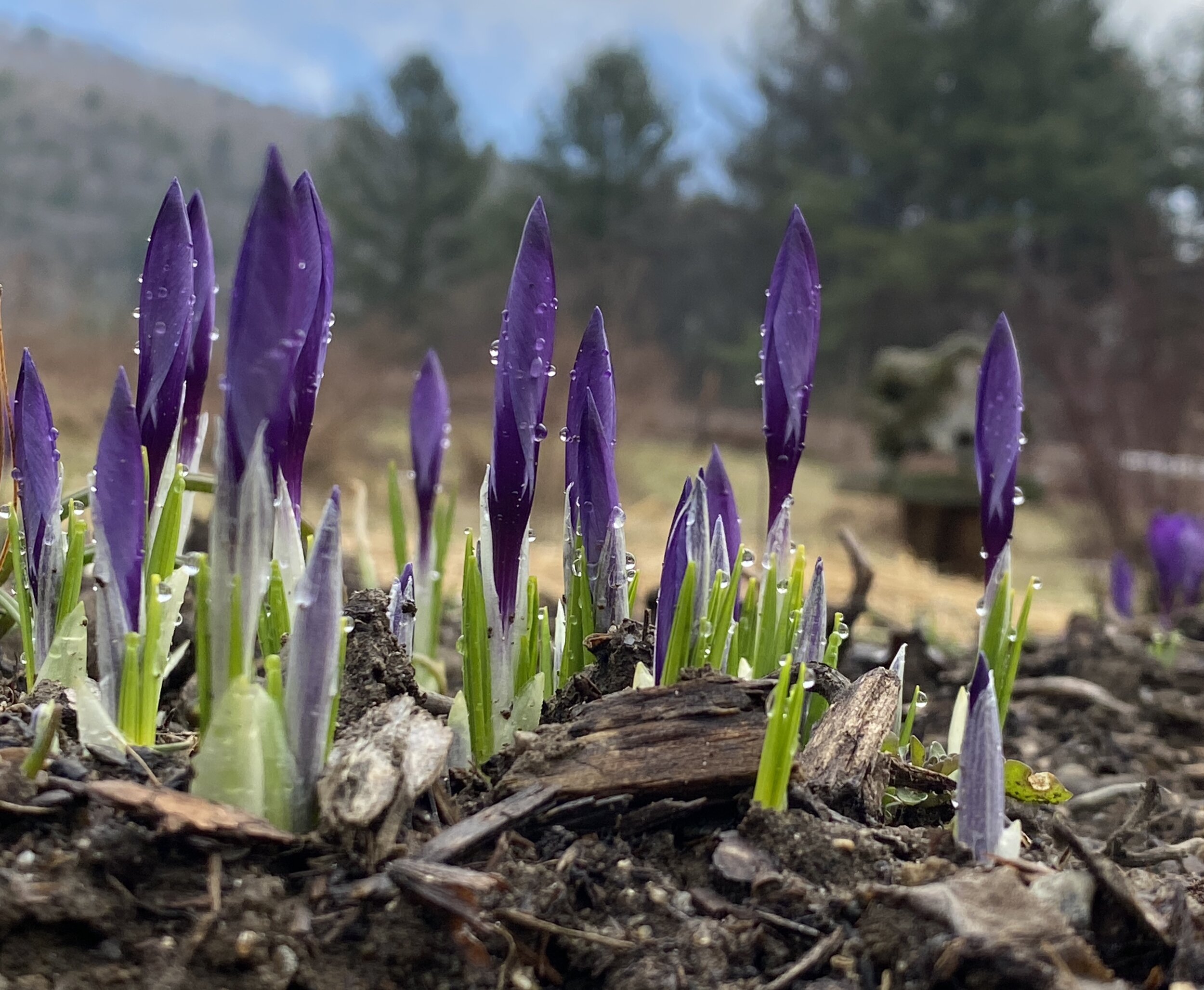
Did you know crocuses are some of the very earliest plants bees feed on in the spring?
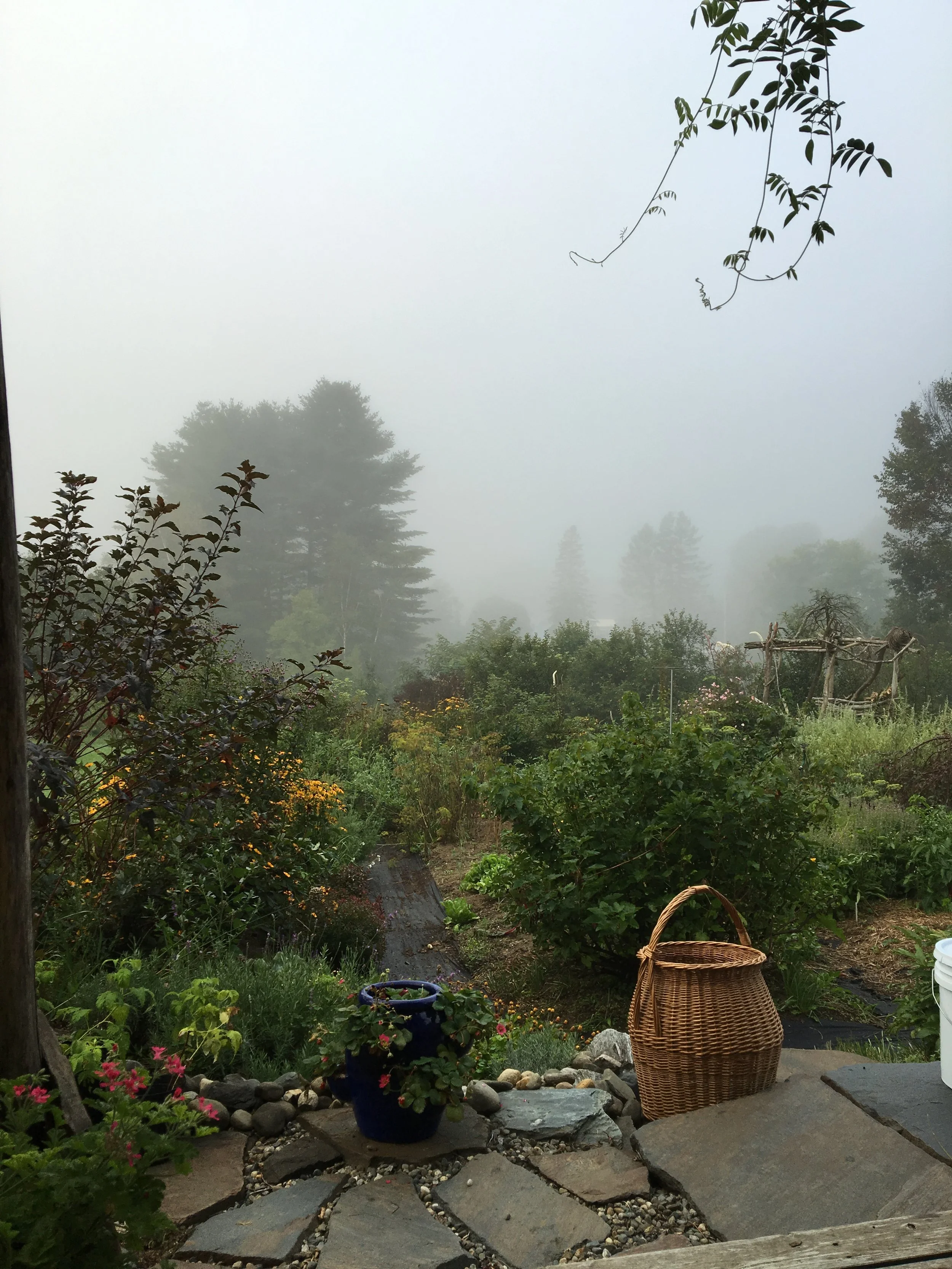
Bee Haven Honey Farm looks out on the village of Putnamville across the North Branch of the Winooski River, which is named for the Abenaki word for wild onions, or what we call ramps here now, which have always been plentiful on the ridge lines of this valley, just east of the Green Mountains of Worcester, Mt. Hunger, Mount Putnam, White Rock Mt. and Hogback Mt.
Being around bee swarms is a joy and a blessing.
A gathering of wax and propolis from hive nooks for use in an infused body butter, alongside some spring violets and violas for use in a vinegar. Did you know violas have similar properties to violets and can be used in similar ways?
Find a blooming hawthorn tree in the spring and spend some time sitting underneath it. What a wonderful way to experience the magic of pollinators and plants and the cycles of the seasons.
Bee Haven was somewhat notorious for using old hive equipment, much of it inherited from the original beekeepers that passed on their hives and apiaries to Rick. Old is wonderful.
Oh, the rose petals and the fresh honey!
Happy to have this picture of the time I was laying under a peak-blooming Basswood/Linden tree and saw this beautiful big hawk fly over, in between the branches.
Honeybees don’t feed on digitalis flowers because their tongues aren’t long enough to reach inside their deep and furry flower passages, though some of the largest pollinator bumble bees will give it a shot. Let this not keep us from growing all the digitalis flowers, including this dreamy favorite, the Grecian Foxglove.
Working in the garden involves being a little more careful when you’re sharing it with lots of honeybees and other pollinators also up to their tending. They aren’t interested in stinging you but it happens when you step or sit on them while they’re getting up to their own work. It can help to remember this for those afraid of them. They’re not seeking you. You’re sitting on them or rubbing up against them and surprising their space and work.
Bees bearding around on the outside of the hive in summer are generally saying it’s really hot and humid out and the hive is packed with honey, pollen and nectar inside, and a whole lot of bees, in the time of its peak population.
If you grow Tulsi in your gardens you know how much the bees love it.
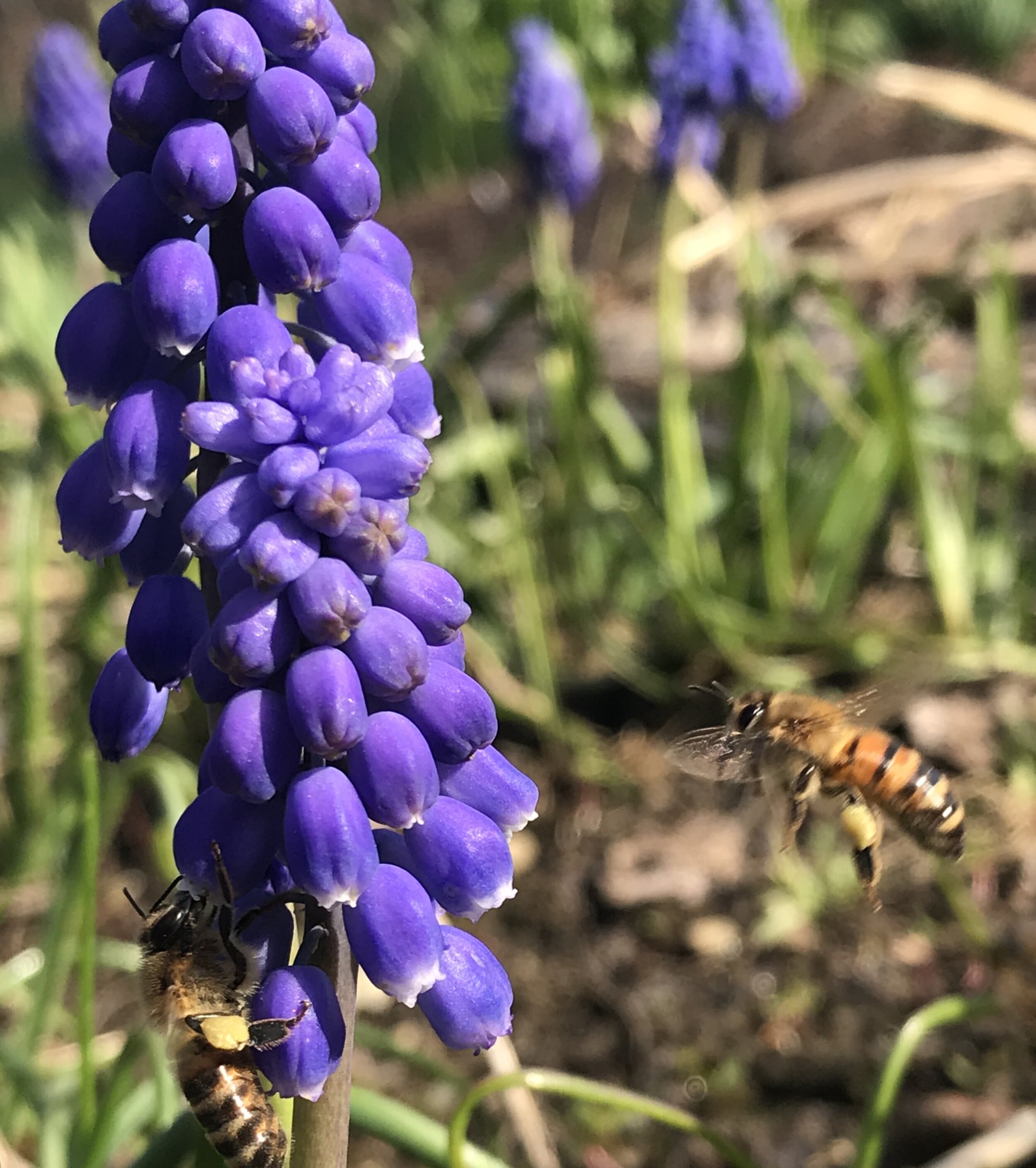
Gardeners have an opportunity to witness honeybees and other pollinators up close and learn so much about their habits as well as being able to enjoy hearing their hums and buzzes. The song of them in the garden is such a pleasure.
Honeybees aren’t into the elders but we are and so are the berry-loving birds. Some years we’d leave them for the birds entirely as a way to make an offering.
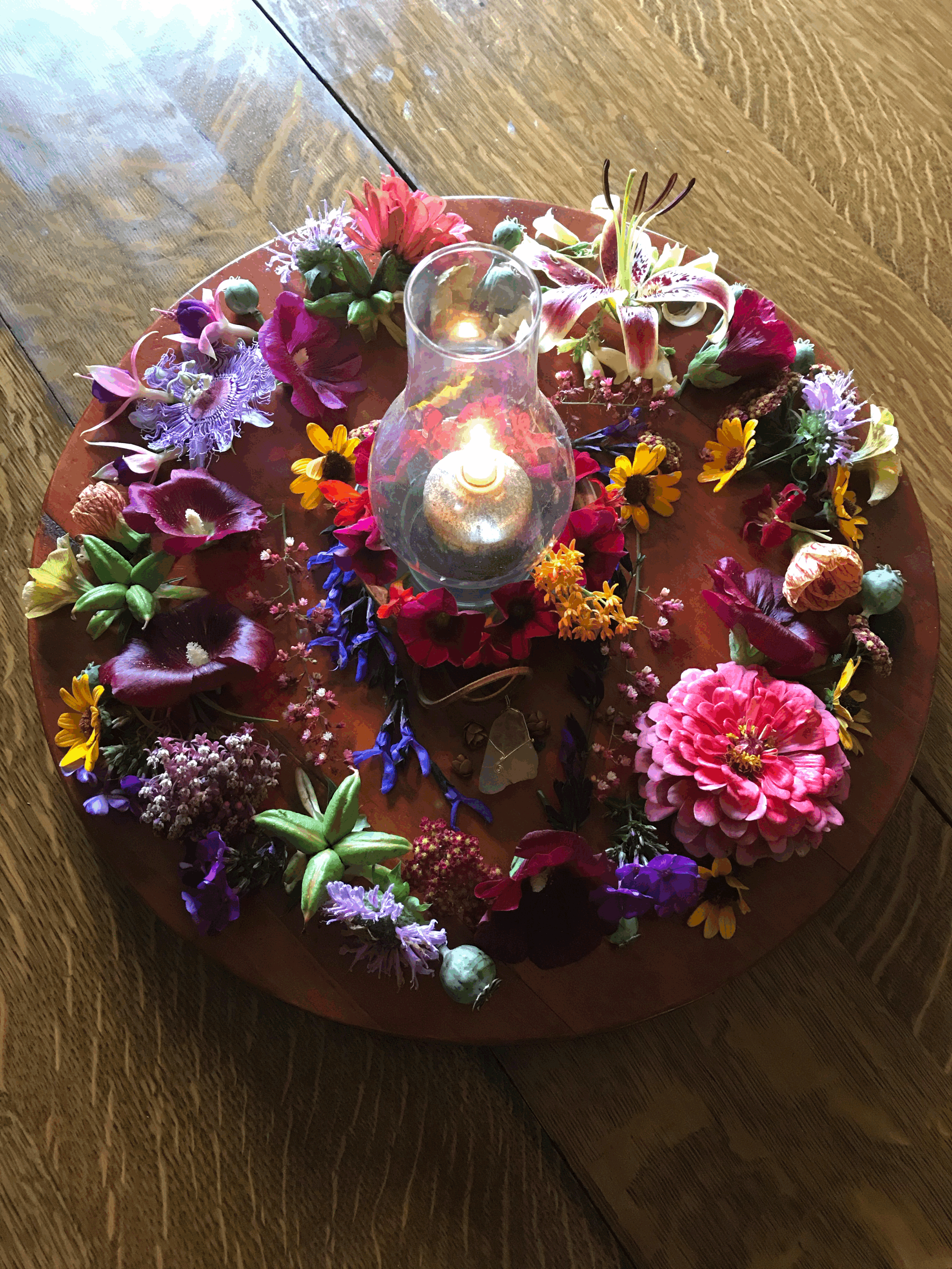
Rick’s Leo birthday is traditionally celebrated with a flower crown on the morning of his day, honoring the sources of honey and the connections between bees and flowers, the Sun and Leo’s. Harvest time blessings.
When all the honey supers were coming and going in the honey house we’d scrape the frames to gather the annual propolis supply to be tinctured and used in other ways, as well, as a hive medicine.
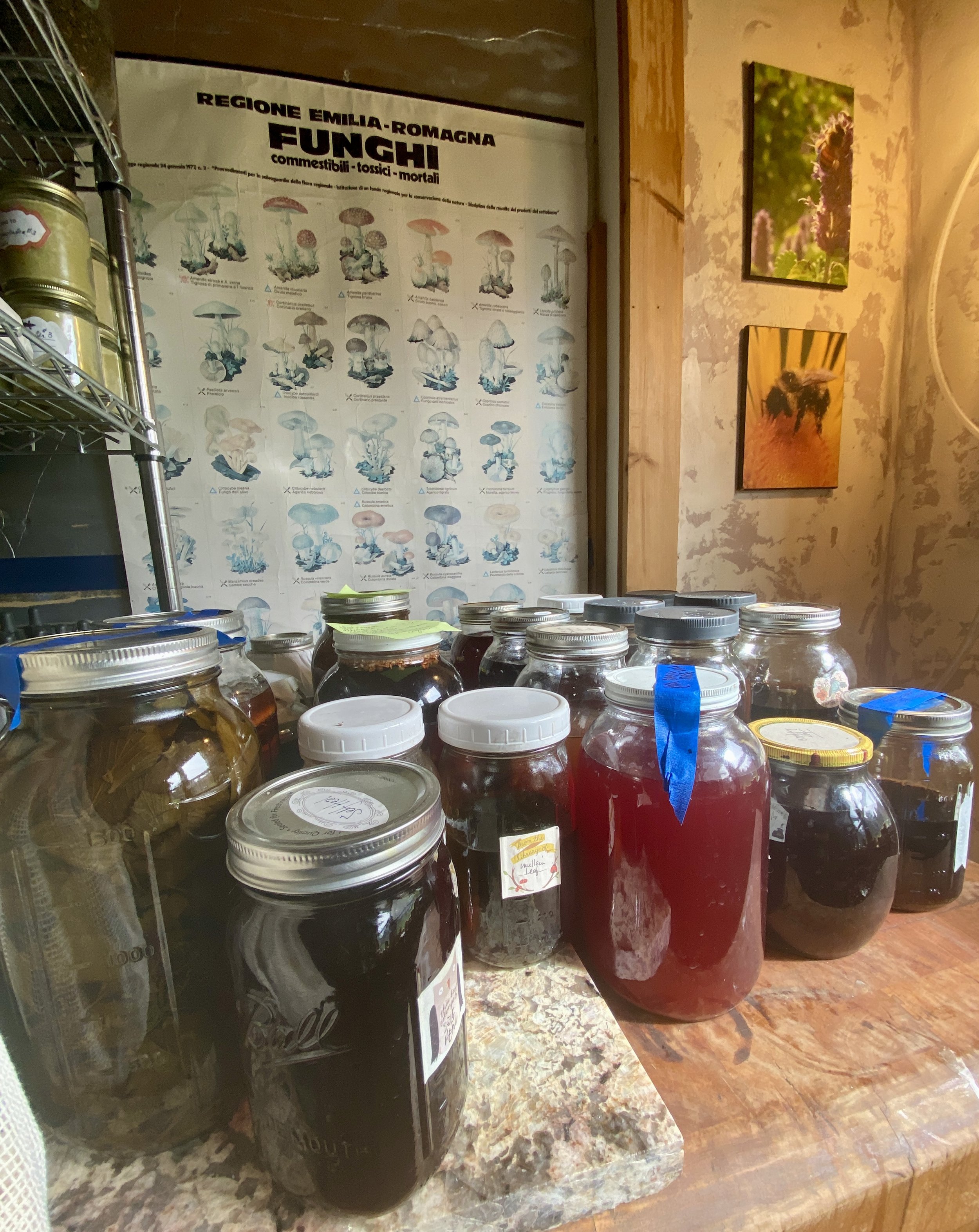
Many kinds of tinctures and vinegars being infused and stored before their eventual straining, for use in syrups, elixir or blends of some kind or for squirting right into our mouths.
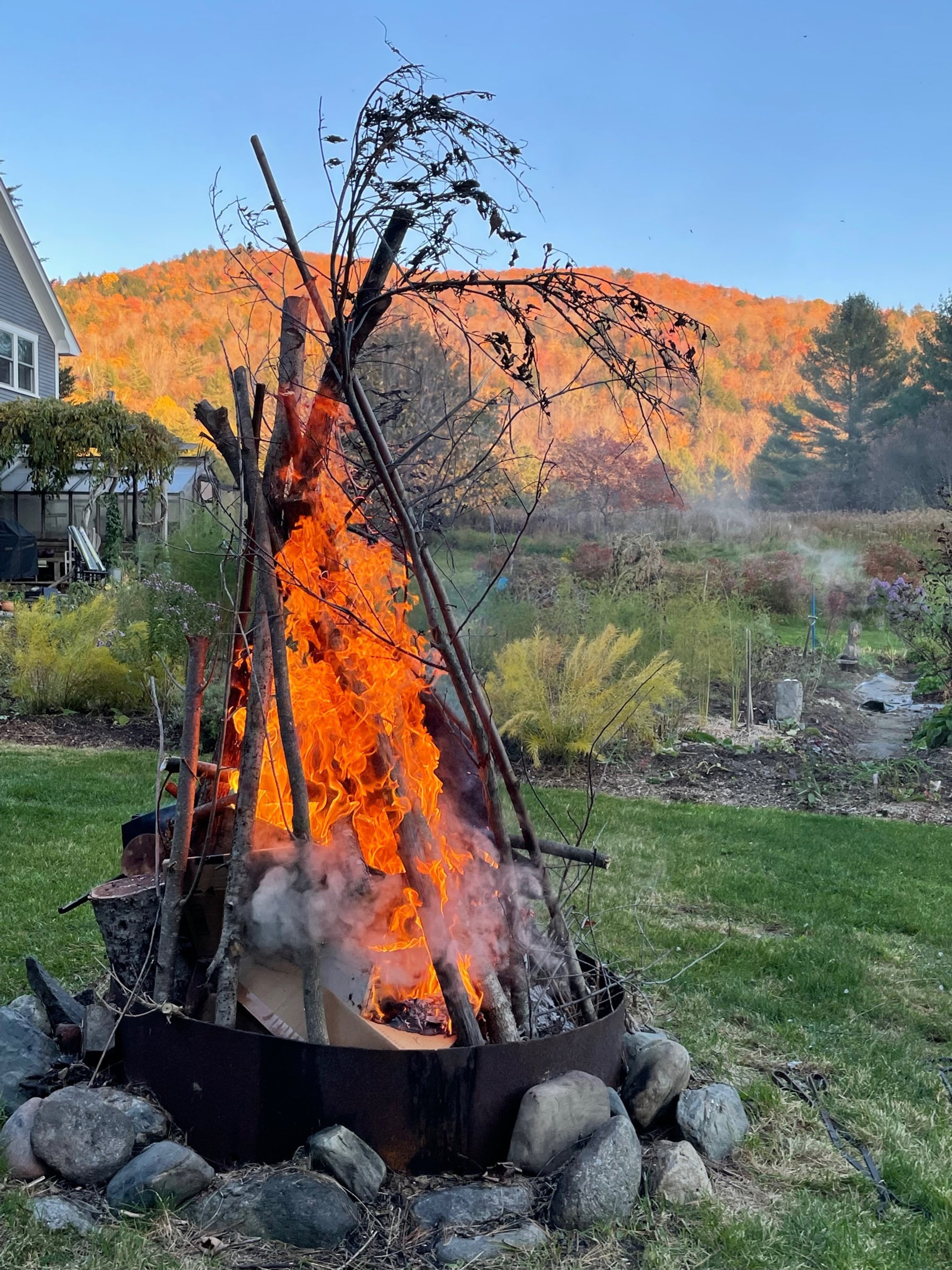
The moment of the year in the fall when the fire colors matched the ridgeline of Long Meadow Mt. to the east of Bee Haven lit up in its seasonal colors.
The honey extracting line full of frames in extracting season.
He definitely spent a whole lot of time standing right there over the years.
The stunning ridge lines of the valley around Worcester in peak foliage. Always breathtaking and a little different every year.
The weeping flowering crab on a cold and rainy fall day.